The Om (or Aum) symbol is one of the most powerful and recognizable spiritual icons in the world. Found in yoga studios, chanted in meditation, and etched into sacred art, Om is more than just a sound—it’s a vibration, a symbol, and a doorway into something deeper. But where does it come from, and why has it remained so meaningful across cultures and centuries?
Om’s origin traces back thousands of years to the Upanishads, ancient Indian spiritual texts written between 800–500 BCE. These scriptures form the philosophical foundation of Hinduism, and also influence Buddhism and Jainism. In the Upanishads, Om is described as the primordial sound of the universe, the audible expression of Brahman, or universal consciousness. It is believed that before anything existed, there was Om—and from that sound, all life was born.
Phonetically, Om is composed of three parts: A-U-M. Each sound holds deep symbolic meaning.
A (Ah) represents creation—the beginning of all things.
U (Ooh) is the continuation of life, the sustaining energy.
M (Mmm) signifies transformation or dissolution—the natural end of a cycle.
Together, they reflect the cycle of birth, life, and death. And what follows is just as important: silence. This quiet stillness after the chant represents the fourth state, or Turiya—pure consciousness, awareness beyond thought, and deep spiritual connection.
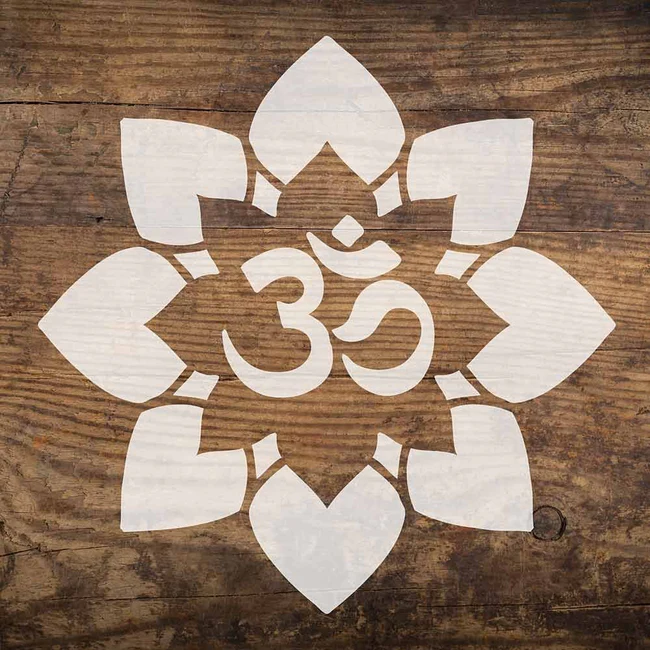
The Om symbol itself (ॐ) is just as layered. Each part of the symbol corresponds to one of the four states of consciousness:
The lower curve represents the waking state.
The middle curve is the dream state.
The upper curve symbolizes deep sleep.
The dot above represents the state of blissful awareness.
The crescent shape just beneath the dot is maya, or illusion—the barrier that keeps us from realizing our true nature.
Today, Om continues to be used in spiritual practices around the world. It’s chanted in yoga and meditation to center the mind, calm the nervous system, and reconnect with the present moment. The vibration of Om is said to resonate within the body, aligning the mind, heart, and breath with the rhythm of the universe. Even a single Om can shift your state of being, acting as a bridge between the physical and spiritual worlds.
In a world that’s often loud, chaotic, and distracting, Om offers simplicity and clarity. It’s a sound, a symbol, and an experience—reminding us that beneath all the noise, there’s a deep, still presence waiting to be remembered.
Om is not just a chant—it’s a return. A return to peace, presence, and the truth of who we are.

Click on which service you are interested in, and we will guide you from there.
Your nutrition plan is tailored to your unique goals, lifestyle, and health needs, ensuring sustainable and realistic changes.
Uncover hidden imbalances for hormones, gut health, and food sensitivities—personalized to help you feel your best.
Experience yoga tailored to your unique needs with our private sessions.